


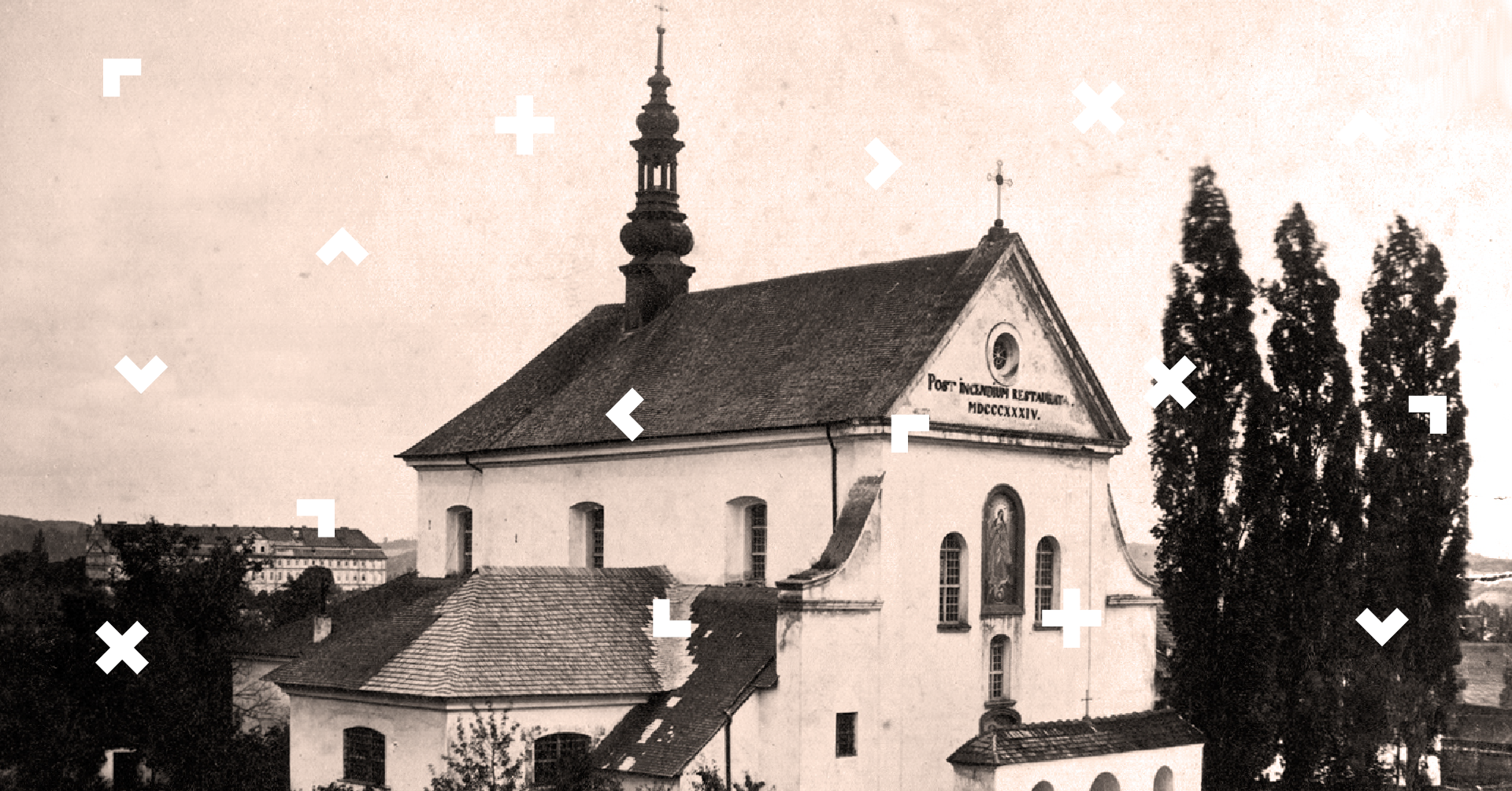
Józef Eder – photographer of 19th-century Lviv | photogaphy exhibition
About the event
Józef Eder (1831–1903) is considered one of the most prominent and best-known professional photographers of 19th-century Lviv. For more than forty years, he documented Lviv and other cities of Galicia, their architecture, landscapes, and inhabitants. His photographs preserved an image of a world undergoing rapid change in the second half of the 19th century.
Relatively little biographical information about Eder himself has survived. Even the exact dates of his birth and death are unknown. Today, we can reconstruct his presence in the photographic life of the period primarily on the basis of surviving photographs, albums, and references published in the contemporary press. It is his body of work that remains the most important testimony to the scale and diversity of his activities.
Without a doubt, an important place in Józef Eder’s creative life was the photographic studio at the Hotel Angielski (English Hotel) at Karola Ludwika 15 – with branches in Jassy (today Iași, Romania) and Stanisławów (today Ivano-Frankivsk), which he ran from 1861 together with his partner, Bernhard Brand. It operated – later under Eder’s name alone – until 1888, when the hotel was demolished. That same year, Eder opened his own studio in Stanisławów, at Sapieżyńska 9 – after his death, it was first taken over by his daughter Teofila (from 1913), and later by his son Władysław (from 1923). It is a rare story of three generations of photographers in one family.
Eder took on nearly all the major subjects of photography at the time: he produced views of Lviv, Przemyśl, Rzeszów, and Kraków, and photographed architecture, landscapes, ethnographic scenes, railway stations, stops, and bridges. A special place in his body of work is occupied by albums devoted to Galician railway lines, including the Lviv-Brody Railway and the Lviv-Chernivtsi Railway.
Portrait photography was no less important a part of his work. Eder photographed both members of the elite and hundreds of ordinary residents of Lviv. Among his surviving works are portraits of figures known from public life, including Władysław Ordon, as well as anonymous residents of Lviv, whose images have become invaluable testimony to the society of the 19th-century city.
Józef Eder’s photographs are remarkable not only for their artistic and technical quality. Their exceptional value also lies in the fact that they allow us to see Lviv and Galicia through the eyes of a photographer who recorded the reality around him with extraordinary consistency. Streets, squares, buildings, railway stations, railways, landscapes, and the faces of local inhabitants together form a remarkable photographic portrait of an era.
Eder’s work was appreciated not only in Galicia. He took part in the Agricultural and Industrial Exhibition in Lviv in 1877, and two years earlier, at the World’s Fair in Vienna (1873), he received an official distinction, confirming that the Lviv photographer ranked among the finest photographic artists in the empire at the time.
Eder’s surviving body of work is something far more important than a collection of 19th-century photographs. It is a visual record of a world that has passed – and one of the most valuable documents of old Lviv.
The photographs presented in the exhibition come from private collections.
Details
When: September 2-30, 2026, open 24 hours a day
Where: Hartwig Alley
Admission free
Accessibility
- The event takes place in a venue that is not architecturally accessible – stairs.
- Read about the accessibility of the Workshops of Culture here.
- Your individual participation needs: fill out the form.